
memories for a lifetime
Western and Central Cultural Tour

Overview
This is considered one of the longest and most popular cultural tours in Bhutan. During this journey, travelers explore the western and central regions of Bhutan. Along the way, you’ll experience a glimpse of the country’s rich religious and cultural heritage.
Furthermore, you’ll gradually discover Bhutan’s pristine environment, rural lifestyle, and pilgrimage sites throughout the trip. Additionally, the tour showcases Buddhist religious landmarks, diverse dialects, traditional arts and crafts, and living culture and traditions.
9 Days | 8 Nights
Duration
9 Days
Group Size
2 & above
Trek grade
Easy
Accommodation
Camp/ Hotels
Best season
Mar-Jun Sep-Nov
Avg. Walking Dist.
3-5 Km
Avg. Walking Time
4-5Hours
Highest altitude
3150 M
Tour highlights
- Many hikes including spectacular Tiger's Nest Monastery.
- Explore villages to experience rural lifestyle.
- Visiting Buddhist monasteries and Dzongs
- Stroll through the streets of Thimphu and Paro.
- Experience typical Bhutanese dinner and drinks with local host.
Tour Itinerary
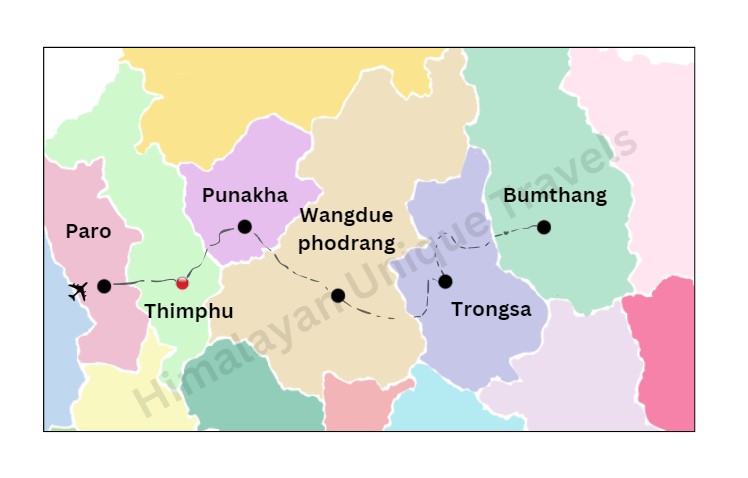
Day 1: Arrive Paro to Thimphu
As your flight nears Bhutan, you can enjoy amazing views of the Himalayas, including the sacred Jumolhari and Jichu Drake peaks.
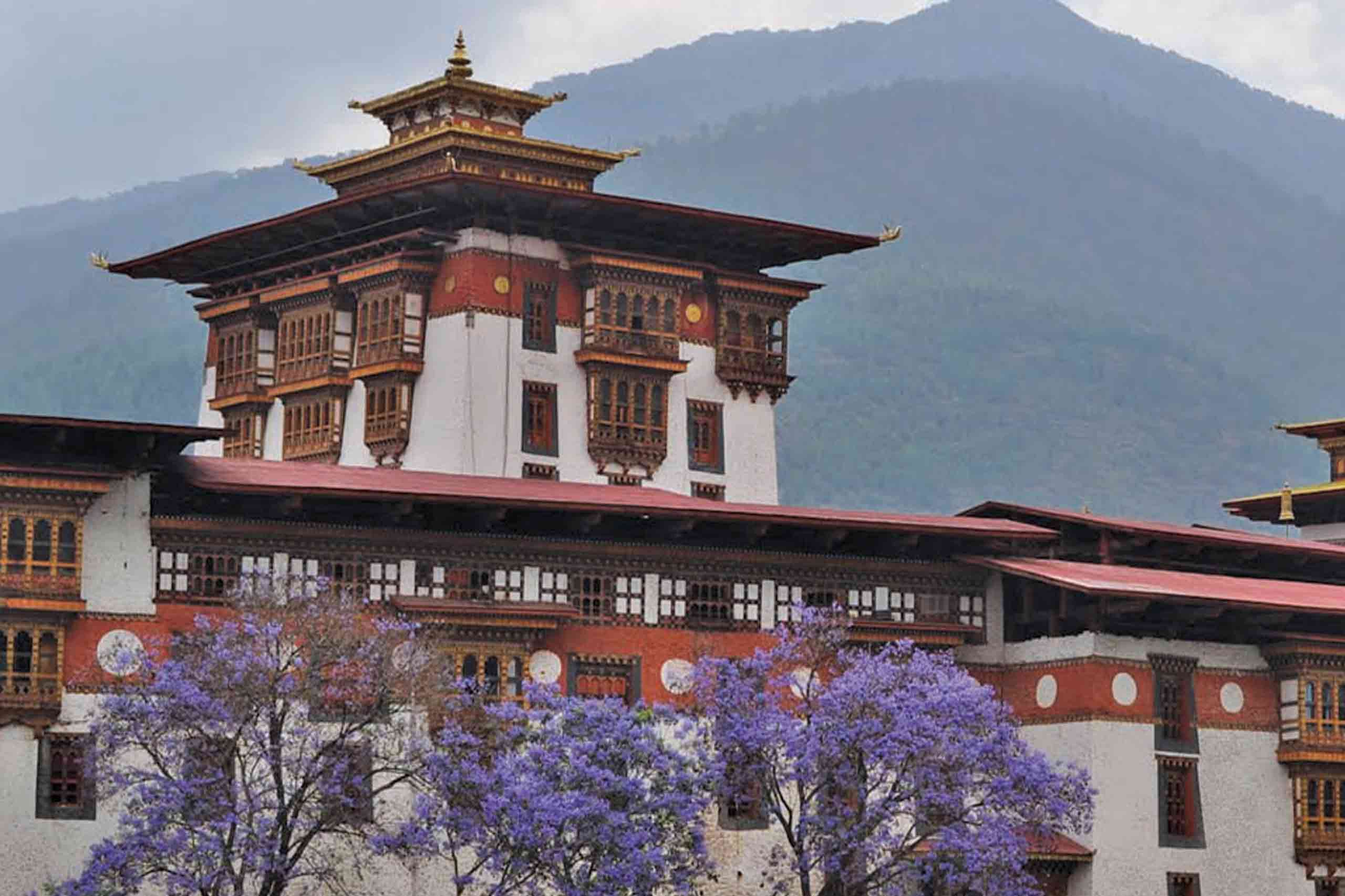
Upon arrival, our guide will warmly receive you and transfer you to a local restaurant for lunch. After your meal, you can visit Paro Rinpung Dzong, meaning “fortress of the heap of jewels,” which Zhabdrung built centuries ago.
From the dzong, you will walk downhill to the road point, crossing the traditional wooden bridge. Next, we’ll visit Kichu, the oldest temple in the country that the Tibetan king Songtsen Gampo built in the 7th century.
Following this, we will take you to Thimphu, the capital of Bhutan. You will spend the night in a comfortable hotel.
Day 2: Thimphu
After breakfast, your sightseeing in Thimphu includes several remarkable landmarks. First, we will visit the King’s Memorial Stupa, which the Royal Family built in honor of the late King Jigme Dorji Wangchuck.
Next, we’ll explore the School of Arts and Crafts (also known as the painting school), followed by the Nunnery Temple. Additionally, you’ll visit Jungshi Handmade Paper Factory, Buddha Point, and Motithang Takin Preserve.
In the evening, we will visit Tashi Chhoedzong, the seat of the national government. Afterward, you can stroll through Thimphu city and absorb the local lifestyle. You will spend the night at your hotel.
Day 3: Thimphu to Punakha
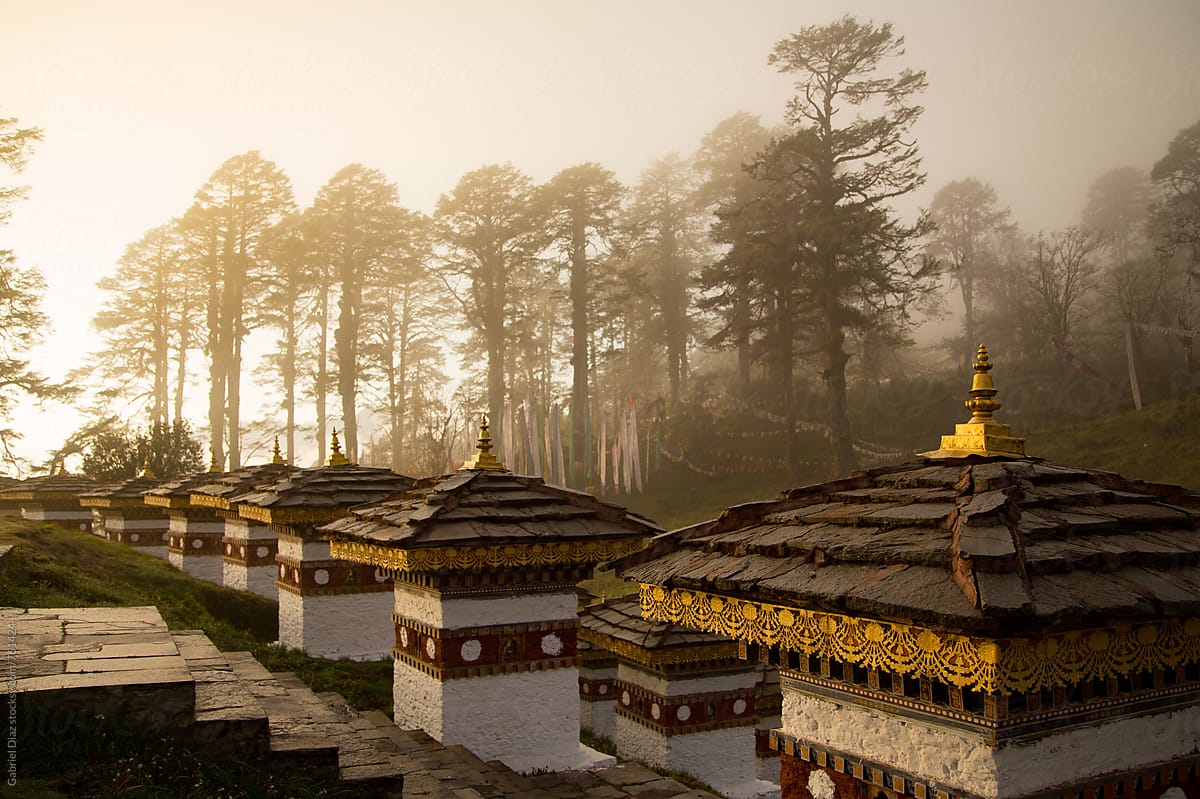
Today, you can enjoy a beautiful drive to Punakha. En route, we will stop at Dochula Pass (3,150 meters), where on clear days you can witness spectacular views of the Himalayas.
In clear weather, you will see all the Himalayan ranges, including Bhutan’s highest peak, Gangkar Puensum (7,560m) above sea level. From the pass, we will drive downhill through forests of rhododendron, fir, and hemlock.
After lunch, you can take a short walk through rice fields to Chimi Lhakhang (the Temple of Fertility). We will then continue driving to Punakha. Upon arrival, we will visit Punakha Dzong, the former capital and most beautiful dzong in Bhutan. You will spend the night in a hotel.
Day 4: Punakha to Gangtey/Phobjikha
Today, we will drive you to remote Gangtey with a short stopover in Wangdue. Here, you’ll get a glimpse of Wangdue Phodrang Dzong, which dramatically sits on the ridge.
We will continue our drive through dense forests of oak and rhododendrons until we reach Lawala Pass (3,250m). The pass offers exotic views of the Himalayan Mountains.
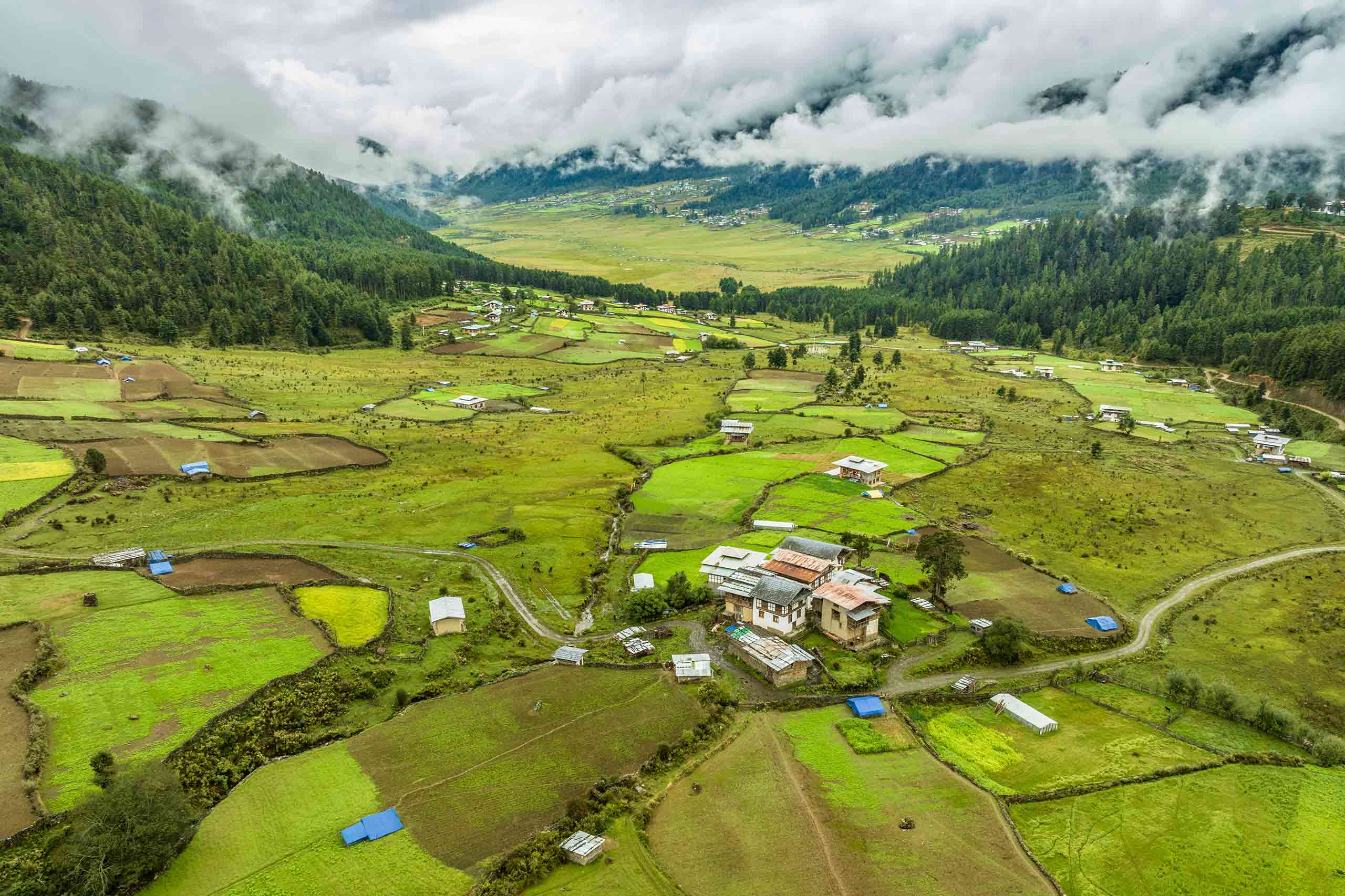
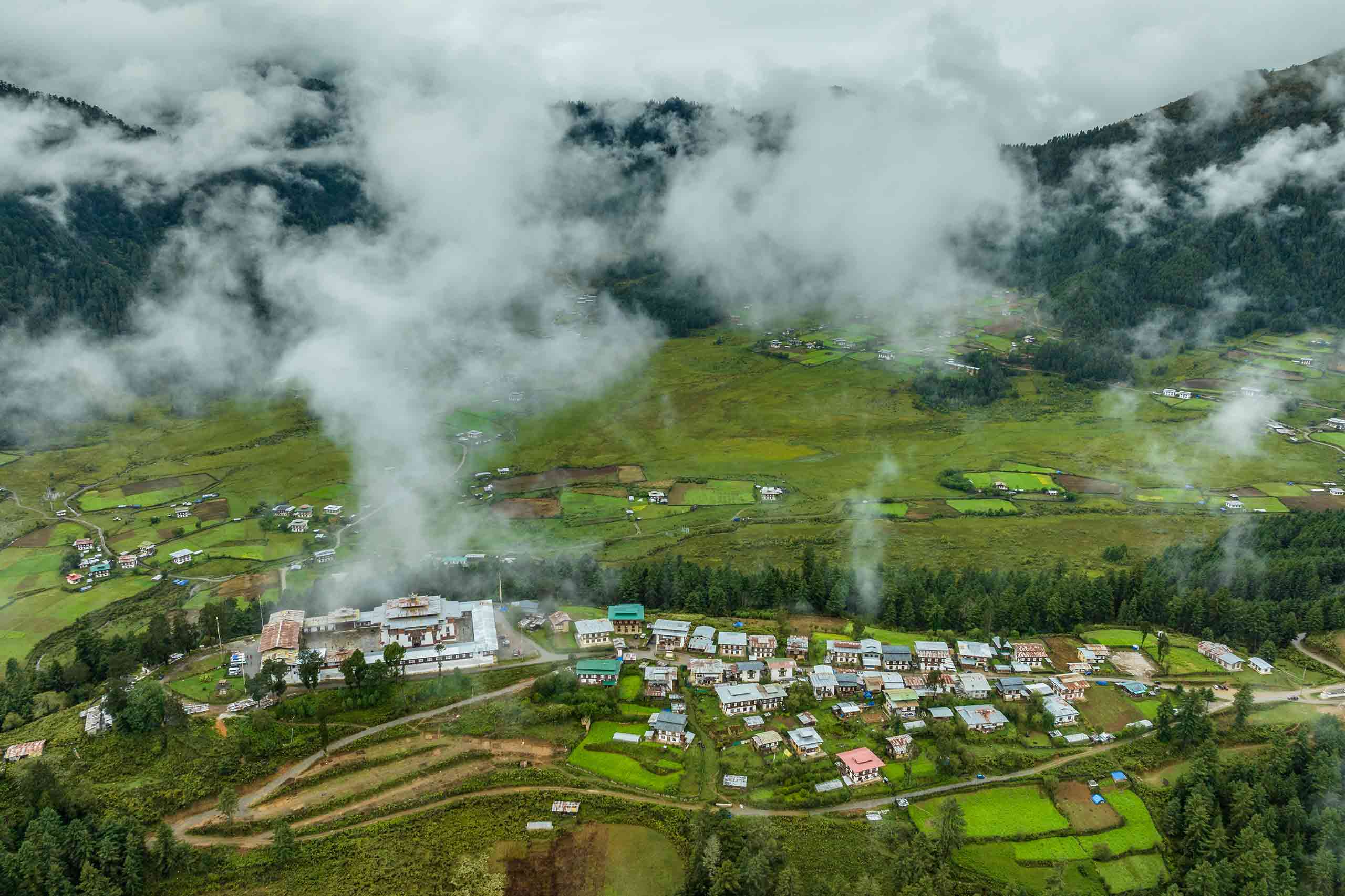
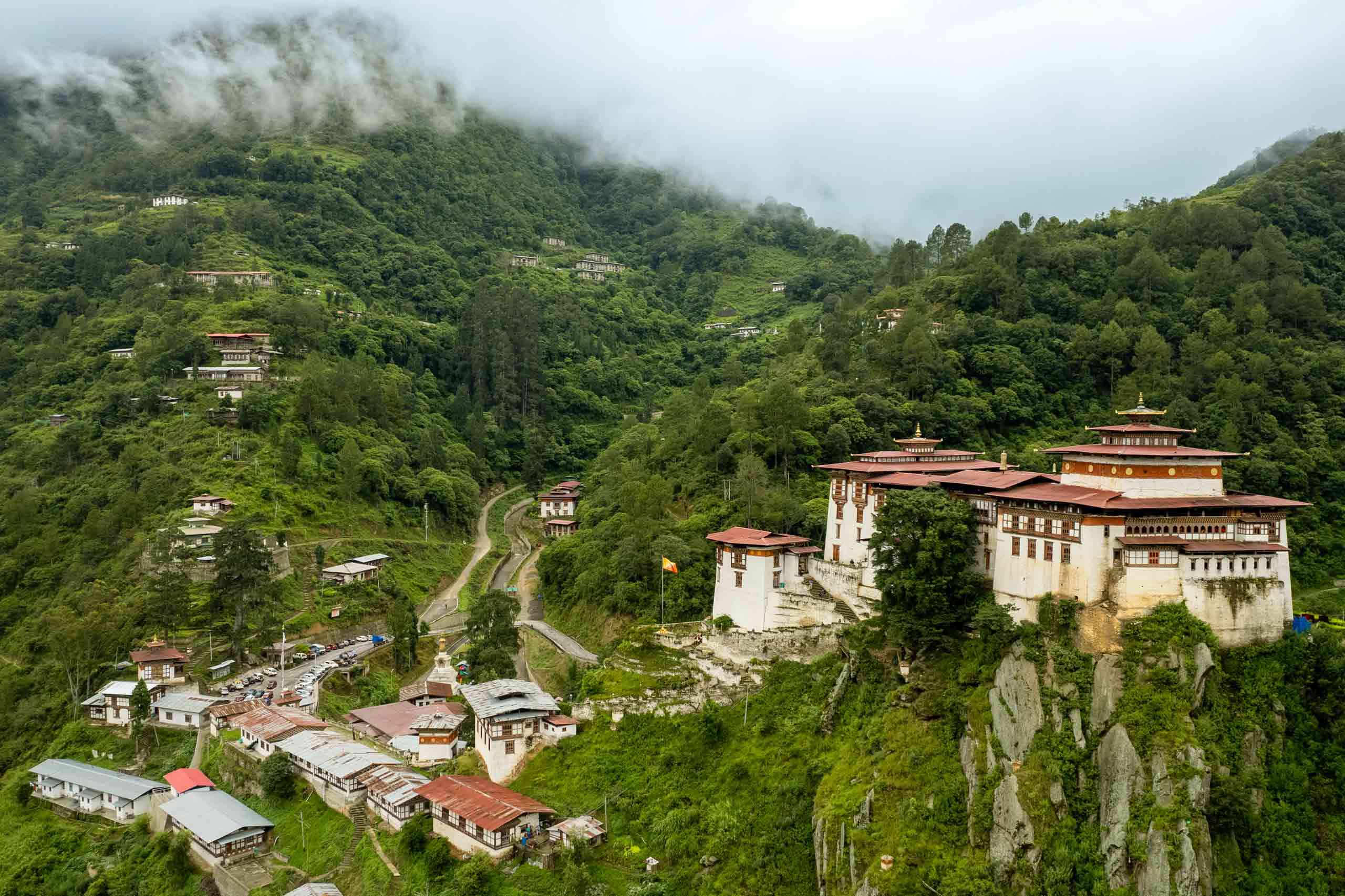
As we drive downhill, you’ll enjoy stunning views of Gangtey Goenpa and Phobjikha Valley. We will visit Gangtey Goenpa, the only Nyingmapa monastery in western Bhutan.
Later in the afternoon, you can hike through the amazing Phobjikha Valley and visit the crane center, which provides detailed information about the valley. This beautiful valley serves as the home to the Black-Necked Cranes, which migrate from Tibet to this valley in winter.
Day 5: Gangtey/Phobjikha to Bumthang
After breakfast, we will drive you to Bumthang. The route follows a spectacular winding road, passing Pele La Pass (3,400m).
We will serve your lunch at Trongsa. After your meal, we will visit Trongsa Dzong, a masterpiece of Bhutanese architecture. You will then proceed to Bumthang, which people often describe as the spiritual heartland of the kingdom.
We will stop at Chummey Yathra (textile weaving) factory, where artisans design yathras with different patterns. You will spend the night in a hotel.
Day 6: Bumthang
After breakfast, your sightseeing in Bumthang includes several sacred sites. First, we’ll visit Jakar Dzong, located on a ridge and built in the 15th century.
Next, we’ll explore Kurjey Lhakhang, where the body imprints of Guru Rinpoche from the 8th century remain preserved on the rock. We’ll then visit Jambay Lhakhang, which the Tibetan king Songtshen Gempo built in the 7th century.
Following this, you’ll take a short hike to Tamshing Lhakhang, which the Buddhist saint Pema Lingpa built in the 15th century. In the afternoon, you can walk around Bumthang town and interact with friendly locals.
Day 7: Bumthang to Paro
You will fly on a domestic flight to Paro. Upon arrival, you can have lunch at a Paro restaurant.
After your meal, you’ll hike to Zuri Dzong, where the views of the valley and Paro Dzong are amazing. Subsequently, you can visit a local archery ground and watch locals playing Bhutan’s national sport. You will spend the night in a hotel.
Day 8: Hike to Tiger’s Nest Monastery
Today, you will hike to Taktsang (Tiger’s Nest) Monastery, Bhutan’s most famous monastery. This sacred site clings to the face of a cliff at 3,100m and offers the best views of Paro Valley.
According to legend, people believe that Guru Rinpoche, the 8th-century spiritual master, flew to this location on the back of a tigress to meditate.
We will serve your lunch at the Cafeteria Restaurant, located halfway up the mountain. After exploring the monastery, you will hike back down to Paro. You will spend the night in a hotel.
Day 9: Depart Paro
In the morning, we will drive you to the airport for your departure. Our representative will bid you a warm farewell and wish you safe travels.
Trail Map

INCLUSION & eXCLUSION
INCLUSION
- Sustainable Development Fee (SDF)
- Accommodation
- All meals
- Transport
- All internal taxes & charges
- Licensed Bhutanese Tour Guide
- Equipment & haulage for trekking tour
EXCLUSION
- Airfare
- Insurance
- Drinks & beverages
- Phone/internet bills
- Tips
- Internet and Phone bills
- Other bills of personal nature
INSURANCE
The tour package does not include travel insurance of any kind. Guests are strongly advised to obtain comprehensive travel insurance coverage from their home country prior to the commencement of their trip. Such coverage should include, but not be limited to, medical expenses, trip cancellation, personal accidents, loss of baggage, and emergency evacuation.
Cultural Tour
While Bhutan is one of the smallest countries in the world, its cultural diversity and richness are profound. As such, strong emphasis is laid on the promotion and preservation of its unique culture. By protecting and nurturing Bhutan’s living culture it is believed that it will help guard the sovereignty of the nation.